
State Department plan, described as the largest mass visa revocation in U.S. history, would target B1/B2 visa holders who later sought asylum
The Trump administration is preparing to revoke as many as 200,000 business and tourism visas held by foreign nationals who have applied for or are currently seeking asylum in the United States, according to State Department documents obtained by the Associated Press and two U.S. officials who spoke on condition of anonymity. If carried out, the move would mark the largest single mass revocation of visas in U.S. history.
What’s Being Targeted
The plan centers on so-called B1 and B2 visas — B1 typically issued for business travel, B2 for tourism, family visits, or medical care — issued between 2016 and 2026 to people who have since sought asylum. The underlying logic, as officials have described it, is that these visas were meant for short-term visits, not as a pathway to remain in the country permanently.
State Department spokesman Tommy Pigott said the agency is “coordinating with DHS to identify and revoke the nonimmigrant visas of foreigners who have come to the United States claiming to be short-term visitors, but then file for asylum to stay here permanently.” Pigott declined to confirm an exact number of revocations, saying the figure “remains dynamic and will be done on a rolling basis.” Deputy Secretary of State Christopher Landau was more pointed in comments posted to social media, writing that people in the U.S. and abroad are “fed up with bogus asylum claims” and that asylum “isn’t supposed to be a loophole to circumvent immigration law.”
What Revocation Would and Wouldn’t Mean
U.S. officials told the AP that a visa revocation would not result in immediate deportation. Rather, those with pending asylum cases would be stripped of their status as business or tourism travelers, a reclassification that could complicate their ability to remain in — or return to — the country while their asylum claims proceed. Applicants for both visa categories are already required to affirm they are not seeking asylum and to provide evidence of intent to return home.
The State Department is expected to formally announce the action within the coming weeks, working jointly with the Department of Homeland Security. Some experts who spoke to NPR characterized the move, notwithstanding its historic scale, as largely symbolic in practical enforcement terms, since visa revocation alone does not strip someone of the right to pursue an asylum claim already filed with immigration courts.
Part of a Broader Pattern
The announcement follows a series of escalating visa restrictions since the start of Trump’s second term, including expanded scrutiny of applicants’ social media histories, new bond requirements for visa processing, and outright bans on issuance to nationals of certain countries. The State Department separately announced in January 2026 that it had already revoked more than 100,000 visas as part of broader immigration enforcement efforts, including roughly 8,000 student visas and 2,500 specialized visas tied to individuals with law enforcement encounters.
Legal observers expect the 200,000-visa plan, once formally announced, to draw court challenges given its scale and the due-process questions raised by mass, category-based revocations rather than individualized case review.
Why It Matters for Haiti’s Diaspora
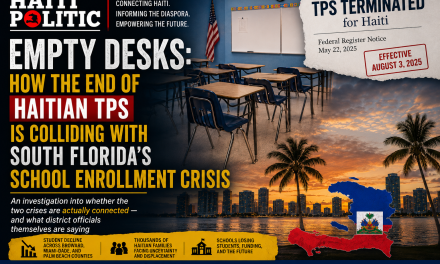
The plan lands amid a broader wave of U.S. immigration restrictions already affecting Haitian nationals this year, following the Supreme Court’s June 2026 ruling in Mullin v. Doe upholding the termination of Temporary Protected Status for roughly 350,000 Haitians, and the resumption of deportation flights to Haiti in August. While the State Department has not specified which nationalities make up the bulk of the 200,000 visa holders targeted, any Haitian nationals who entered on B1/B2 visas and subsequently filed for asylum — citing gang violence, political instability, or the broader security crisis at home — would fall within the plan’s stated scope. No breakdown by country of origin has yet been made public.