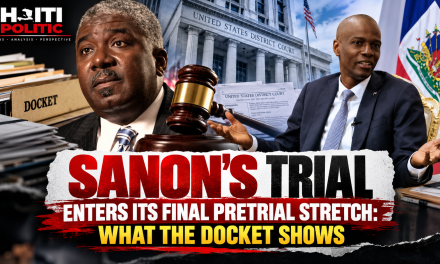
MIAMI, FL — As the federal investigation into the assassination of Haitian President Jovenel Moïse sharply escalates in South Florida, public records reveal a calculated financial maneuver executed by one of the primary suspects just weeks before being taken into custody.
On September 20, 2026, FBI agents arrested Samir Handal, a 68-year-old Haitian businessman, at his Florida residence following a newly unsealed federal indictment. Handal faces multiple severe counts, including conspiracy to kill or kidnap a person outside the United States and providing material support resulting in death. U.S. prosecutors allege Handal owned the Port-au-Prince residence that served as a critical safe house and operational hub for the conspirators.
However, county real estate filings indicate that Handal was preparing for legal exposure long before federal agents arrived at his door.
The Property Transfer
According to official property records dated February 3, 2026, Samir Handal and his wife executed an “Intrafamily Transfer” of their property. The deed shows that the home was transferred from the couple as “Husband and Wife” to a Trust, explicitly categorized under a “Revocable Trust” structure.
The transaction was recorded on February 6, 2026, with a recorded document price of $0. This confirms a non-sale equity transfer designed strictly to alter legal vesting from personal ownership to a trust entity.
Strategic Asset Management Ahead of Arrest
In high-stakes federal criminal defense cases, moving real estate into a revocable trust right before an expected indictment serves as a highly calculated maneuver.
-
Securing Family Stability: By transferring the title into a trust named under his wife, the asset is structured to stay functional if Samir Handal faces long-term detention or a maximum sentence of life in prison.
-
Avoiding Management Interruption: If a property remains under a standard personal deed, an incarcerated individual cannot easily sign documents, authorize property operations, or execute transactions. The trust ensures a co-trustee or successor trustee retains immediate, uninterrupted operational control over the home.
-
Funding the Defense: Notably, Handal is currently the only defendant in this sweeping federal sweep to secure private, high-profile defense attorneys rather than relying on a public defender. Placing real estate in a trust enables the family to cleanly manage, borrow against, or liquidate equity to cover mounting legal bills without waiting for a power of attorney to clear.
The Limits of a Revocable Trust
While the transfer provides immediate operational flexibility for Handal’s family and legal team, it offers no protection against the federal government’s reach. Because a grantor retains full control to revoke or alter a revocable trust at any time, the asset remains part of Handal’s personal net worth.
If federal prosecutors successfully argue that the Florida property—or the funds used to maintain it—are connected to the broader conspiracy or subject to criminal restitution fines, the U.S. Department of Justice can still seek a court-ordered freeze or pursue asset forfeiture.
Handal has maintained his innocence for years regarding the 2021 plot. As his defense team prepares to fight the charges head-on in a Miami court, this property record stands as a paper trail showing exactly how the logistics of a high-profile criminal defense begin long before the handcuffs are clicked shut.